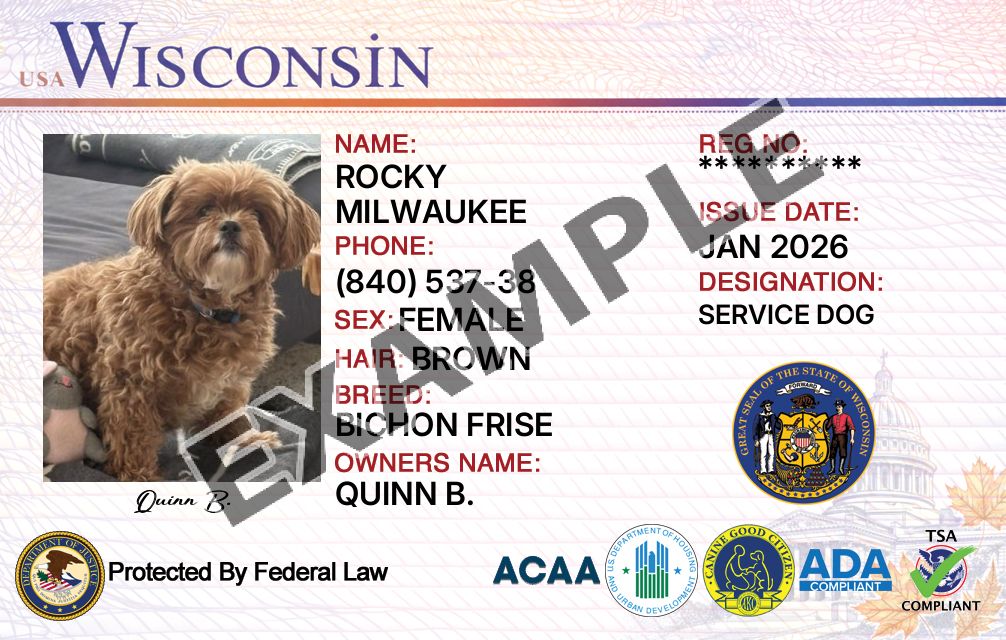
Where Do I Register My Dog in Wisconsin for a Service Dog or Emotional Support Dog?
If you’re searching where do i register my dog in Wisconsin for my service dog or emotional support dog, the key point is this: Wisconsin does not have a single, statewide “service dog registry” or “emotional support animal registry” that you must use to make your dog legitimate. Instead, most residents need a dog license in Wisconsin, and that licensing process is typically handled locally (by your city, village, town, or county office) and is closely tied to rabies vaccination.
Important: Licensing vs. “Registration”
In Wisconsin, “registering” your dog usually means getting a local dog license and tag. A dog license helps your community with rabies control, identification, and animal control services. It is different from your dog’s legal status as a service dog (public access rights under disability laws) or an emotional support animal (primarily a housing-related accommodation concept).
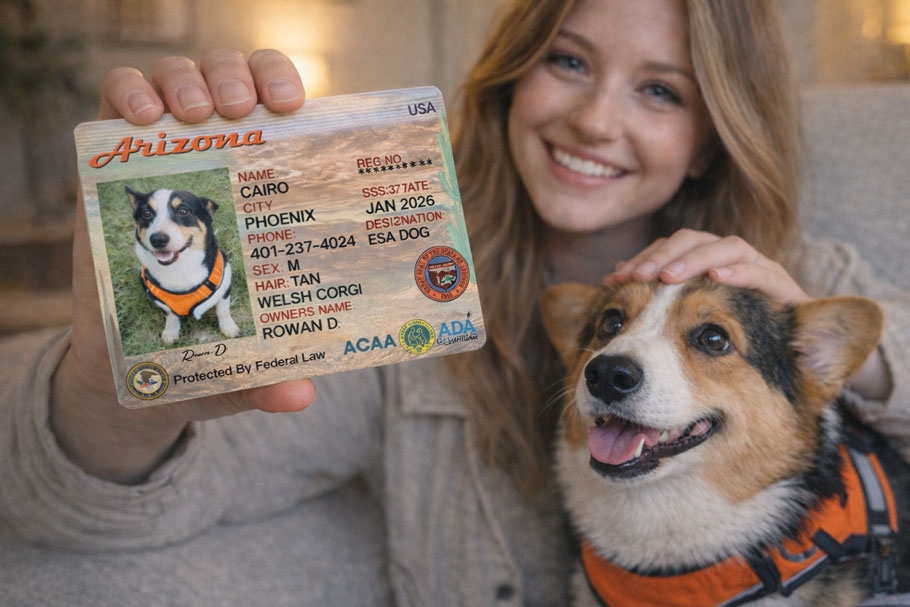
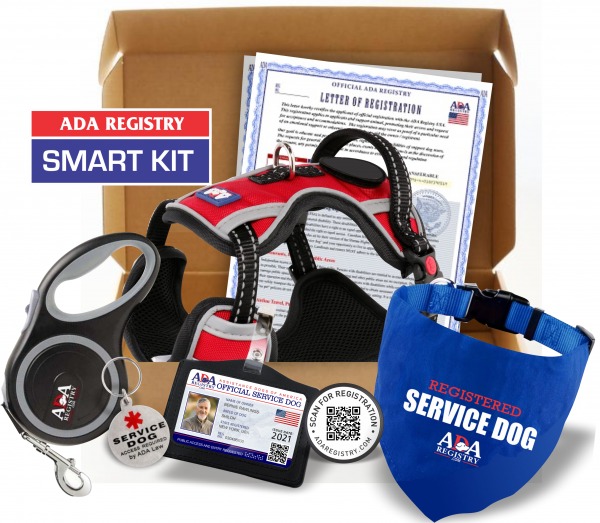
Avoid paid “registries” or “certifications” that claim to legally register a service dog or ESA—those are not required for public access or for licensing.
Where to Register or License Your Dog in Wisconsin
Because where to register a dog in Wisconsin depends on where you live, start with your local municipal clerk/treasurer or the county office your community directs you to. Below are examples of official Wisconsin offices that publish dog licensing or animal control information. If an item (like an email address) is not posted publicly, it is intentionally left blank here.
Example Office: County Clerk (Dog Licensing Info)
Manitowoc County Clerk — Manitowoc County Courthouse
- Address: 1010 S 8th Street, 1st Floor, Room 115
- City/State/ZIP: Manitowoc, WI 54220
- Phone: (920) 683-4003
- Email: Not listed on the office page
-
Office Hours:
Mon 8:30 AM–5:00 PM
Tue–Fri 8:30 AM–4:30 PM
Example Office: Sheriff’s Office (Dog Licensing)
Price County Sheriff’s Office — Attn: Price County Humane Officer
- Address: 164 Cherry St
- City/State/ZIP: Phillips, WI 54555
- Phone: (715) 339-3011
- Email: Not listed on the dog licensing page
-
Office Hours:
Mon–Fri 8:00 AM–4:00 PM
Example Office: Clerk-Treasurer (Dog License)
Village of Harrison — Village Hall
- Address: W5298 State Rd 114
- City/State/ZIP: Menasha, WI 54952
- Phone: (920) 989-1062
- Email: adminasstistant@harrison-wi.org
- Office Hours: Not listed on the dog license page
Example Office: Animal Control (Local Enforcement)
Milwaukee Area Domestic Animal Control Commission (MADACC)
- Address: 3839 W Burnham Street
- City/State/ZIP: West Milwaukee, WI 53215
- Phone: (414) 649-8640
- Email: info@madacc.org
-
Office Hours:
Mon–Fri 10:00 AM–7:00 PM
Sat–Sun 10:00 AM–5:00 PM
Tip: Start With Your Municipal Treasurer or Clerk
In many Wisconsin communities, the municipal treasurer (or clerk-treasurer) is the collecting official for the local dog license. Your county may publish instructions, but the actual application and payment often go through your city, village, or town office. If you’re unsure which office is responsible, call your city/village/town hall and ask specifically about the animal control dog license Wisconsin process.
Overview of Dog Licensing in Wisconsin
What a “Dog License” Means in Wisconsin
A dog license in Wisconsin is a local license (often evidenced by a tag) that helps identify your dog and supports rabies control, animal control operations, and community safety. While Wisconsin law sets key statewide rules (like the licensing year and late fees), the day-to-day process—forms, where you pay, how you receive the tag, and local rules—typically comes from your municipality and/or county.
Licensing Age, License Year, and Late Fees
Many Wisconsin offices describe licensing as required for dogs 5 months of age or older, and the statewide license year runs from January 1 through December 31. If you miss the deadline, Wisconsin law authorizes a $5 late fee in common situations, such as failing to obtain a license before April 1 or within a set timeframe after acquiring a licensable dog. Your local government may also set additional fees or rules consistent with state law.
Rabies Vaccination Is Central to Licensing
In Wisconsin, rabies vaccination is not just a “good idea”—it is a legal requirement and is commonly required as proof before a municipality will issue a license. The state rabies control program requires vaccination for dogs by specific ages and intervals, and local licensing offices often ask for a current rabies certificate as part of the application.
How Dog Licensing Works Locally in Wisconsin
Step-by-Step: Where to Register a Dog in Wisconsin
- Confirm your local licensing office. Search your municipality’s website (city/village/town) for “dog license,” or call the clerk/treasurer. Counties may provide guidance, but many licenses are issued by local municipal officials.
- Get a current rabies vaccination and keep the certificate. Most offices require proof of rabies vaccination before issuing the license tag.
- Submit your application and fee. This may be in person, by mail, via drop box, or via an online system (when offered by a government office).
- Receive your tag and keep it with your dog. Your municipality will generally issue a tag associated with the license year.
- Renew annually (unless your locality offers multi-year options tied to vaccination duration). Many places renew each calendar year and add late fees after local deadlines.
Why It’s Local: Cities, Villages, Towns, and Counties
Wisconsin’s framework expects local governments to handle collection and enforcement. That’s why “where do I register my dog in Wisconsin” is most accurately answered as: license your dog through your local municipal office (and follow any county-specific instructions where applicable). In some areas, county animal control or a sheriff’s office may coordinate enforcement or the licensing process, while in others the clerk/treasurer is the primary point of contact.
Rabies Vaccination Requirements (Statewide Rules)
Wisconsin’s rabies law generally requires that a dog be vaccinated against rabies by no later than 5 months of age, then revaccinated within 1 year after the initial shot, and then revaccinated before the vaccination expires (often up to 3-year intervals depending on the vaccine and certificate). If you obtain a dog or bring a dog into Wisconsin after it is 5 months old, vaccination is generally required within 30 days unless the dog has a current rabies certificate.
Does a Service Dog or ESA Still Need a Dog License?
Usually, yes. A service dog or an emotional support animal can still be subject to local licensing and rabies requirements. In other words: having a disability-related need for the animal does not automatically replace the need for a local license tag. If your dog is a service dog, ask your local licensing office whether any reduced fee, waiver, or special documentation applies in your municipality.
Service Dog Laws in Wisconsin
Service Dog vs. Dog License: Two Different Things
A dog license is a local identification and compliance tool (rabies control + local animal regulations). A service dog is an animal trained to do work or perform tasks for a person with a disability. These are separate concepts: you can have a fully legitimate service dog and still need to get a local license tag.
Public Access Basics (What Makes a Service Dog a Service Dog)
A service dog’s status comes from its training and function—not from a purchased certificate, ID card, vest, or online registration. Businesses and public places generally focus on whether the dog is under control and whether it is actually a trained service animal assisting with a disability.
What You Can Expect When Licensing a Service Dog Locally
When you apply for a license, local offices commonly request: rabies vaccination proof and basic ownership information. Some localities may also ask whether the dog is spayed/neutered, because Wisconsin law allows different fee levels for altered vs. unaltered dogs. If your municipality has special rules for service animals, the clerk/treasurer or animal control office can tell you exactly what (if anything) is required beyond the standard license process.
Emotional Support Animal Rules in Wisconsin
ESAs Are Not the Same as Service Dogs
An emotional support animal (ESA) provides emotional support, comfort, companionship, or well-being, but is not trained to perform tasks for a disability. That difference matters: ESAs typically do not have the same public access rights as trained service dogs.
Housing Is the Main Context Where ESA Rules Apply
In Wisconsin, ESA issues most often come up with housing (rentals, condos, and similar living situations). Landlords or housing providers may request reliable documentation that you have a disability and a disability-related need for the emotional support animal, and Wisconsin law also includes consequences for intentionally misrepresenting disability or need for an ESA in order to obtain housing accommodations.
Do ESAs Need a Local Dog License in Wisconsin?
In most cases, yes. Even if your dog is an ESA, your city/village/town may still require a local license tag and proof of rabies vaccination. If you are looking up where to register a dog in Wisconsin for an ESA, the practical answer is still: get your local dog license and keep rabies documentation current.
Frequently Asked Questions
There is typically no required statewide service dog registry to make your dog a service dog. What you usually must do is maintain a valid dog license in Wisconsin through your local municipality (if required where you live) and follow rabies vaccination rules. Service dog status is based on disability-related training and tasks, not on purchasing an online registration.
Start with your city, village, or town clerk/treasurer. Many Wisconsin counties publish guidance, but the collecting official is often local. If your area uses a county animal control agency or a sheriff’s office for licensing, your municipal office will direct you there. This is the most accurate way to answer where to register a dog in Wisconsin without relying on third-party services.
Most communities require proof of current rabies vaccination (a rabies certificate) and basic owner information. Many areas also set different fees depending on whether the dog is spayed/neutered. Your local office can tell you the exact list of required documents.
Generally, no. An ESA is mainly a housing accommodation concept and does not replace local licensing rules or rabies vaccination requirements. Even with an ESA, you typically still need to comply with local requirements for a dog license and keep vaccination documentation current.
If your dog is already vaccinated and you have a current rabies certificate, you may be able to license locally using that proof. If your dog is over the rabies-vaccination threshold and does not have current documentation, Wisconsin rules generally require vaccination within a defined timeframe. Contact your local clerk/treasurer (or the county office your municipality uses) and ask how to license a newly relocated dog.
Disclaimer
Licensing requirements and office locations may change. Residents should verify details with their local animal services office within Wisconsin.